
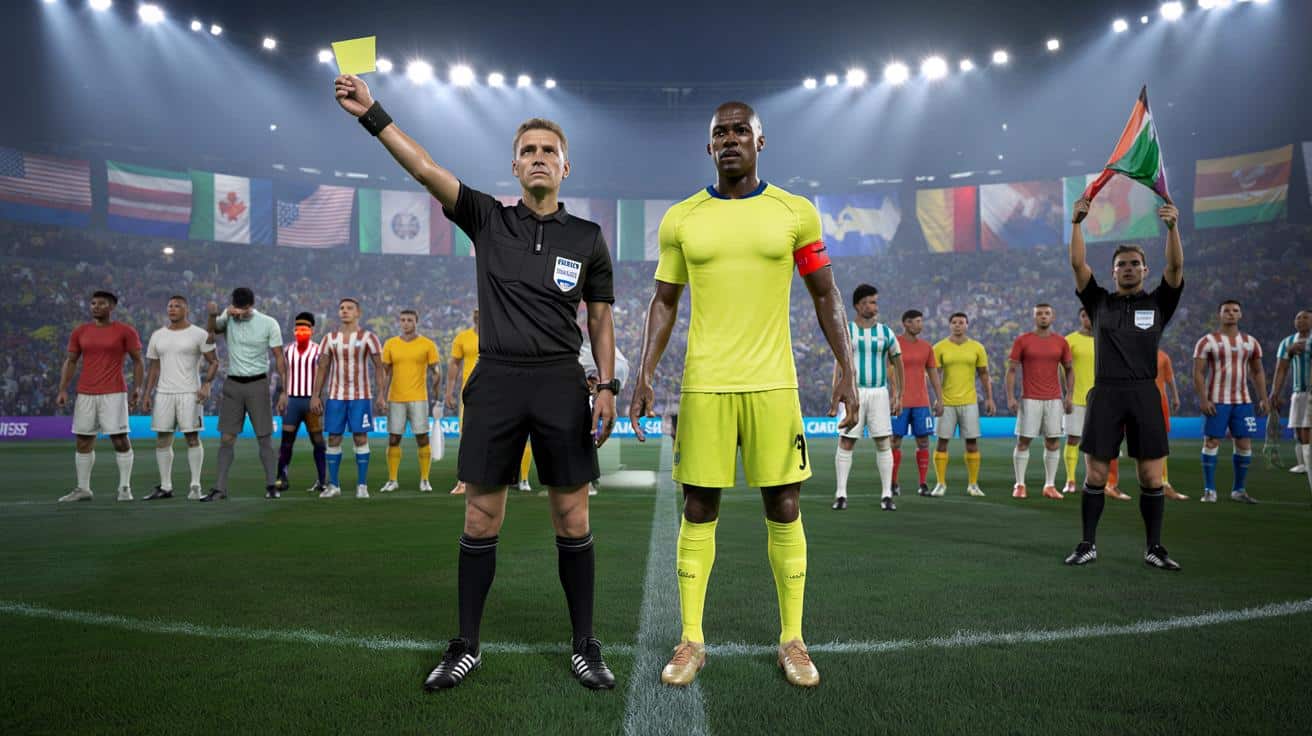
It will be enforced at every match across the expanded tournament in the US, Canada and Mexico. The aim is simple: cut chaos, keep the game moving, and make who speaks — and when — crystal clear.
The first time you see it, it’s almost disarming. A referee plants their feet near the centre circle, raises a flat palm, and gestures for a single player in a bright armband to step forward while everyone else backs away. The noise of 70,000 comes in waves, yet the on-pitch conversation is calm, clipped, deliberate. No swarm. No jostle. Just captain to referee, face to face, thirty seconds and done. A new rhythm takes hold. And then play snaps back to life. It looks small. It doesn’t feel small. It changes everything.
What FIFA’s captain-only rule really changes
Strip it back and the idea is clean. In moments of controversy — a late flag, a debatable handball, a chaotic corner — only the captain can approach the referee. Everyone else must keep distance. **Any player who sprints in waving arms or chipping away risks an instant booking, with the referee empowered to escalate if the crowding persists.** The armband becomes a licence to speak, not a licence to harangue. That shift of gravity, from mob emotion to a single point of contact, is the whole point.
Think about the last World Cup when a tight offside call drew half a team around the official in seconds. On broadcasts, you could count eight or nine players in the frame, each one adding heat and stealing seconds. Trials in top leagues have shown that when captain-only protocols are applied, dissent incidents drop and restarts happen sooner. The average time from a foul to the next whistle shrinks. It’s not magic. It’s a new social rule, backed by yellow cards, and it nudges everyone into better habits under pressure.
There’s a deeper logic here. Dissent doesn’t just fray tempers — it steals minutes that fans never get back. FIFA’s been pushing for cleaner timekeeping since Qatar 2022 with stricter added time; this pulls the same rope from another end. Fewer melees around the referee mean quicker decisions and fewer long stoppages for VAR to manage amid chaos. It also clarifies TV pictures: one captain, one conversation, fewer angles that need explaining. Clarity is a competitive edge in a tournament watched by billions.
How it will look and feel on the pitch
The mechanics are simple enough to follow from the stands. The referee signals, the captain steps in, and the 10‑metre bubble around the conversation holds. If the captain is the goalkeeper, play pauses differently: an outfield vice‑captain is expected to front the talk at halfway. Armbands must be unmissable, and if a captain goes off, a new one is clearly nominated before play resumes. The interaction itself has a tight window — think half a minute — and the restart is set. *Less noise, more football.*
Players will need to rewire old habits. We’ve all had that moment when the blood rushes and you want to defend a team‑mate right now. The safest play will be obvious: breathe, let your captain handle it, save your energy for the next duel. Let’s be honest: nobody actually does that every day. But the sanction ladder will leave little room for freelancing. Expect coaches to drill this in pre‑tournament camps, armband roles to be rehearsed, and squad leaders to practise “distance management” in flashpoint moments.
One senior referee who worked at the last World Cup put it plainly:
“If one player speaks and the rest play, the game flows. If eight speak, nobody plays. This rule draws the line in paint.”
- Referee signal: open palm to hold players, beckon for captain only.
- Sanctions: quick yellow for crowding; repeated offences can move a free-kick forward or trigger technical area warnings.
- VAR interplay: conversations stay captain‑only; stadium explanations remain concise once a review is complete.
- Armband clarity: bright, standardised colours so the right voice is obvious in a split second.
Why it matters for a bigger, longer World Cup
The 2026 World Cup will be larger, with more matches and more game states that turn spicy. This rule is a pressure valve. It promises less scrapping over decisions and more ball in play. The ripple effects are sneaky: tactical fouls become a touch riskier if the aftermath earns silly bookings; captains gain real agency as translators of mood; referees manage heat rather than noise. **It’s a small tweak with a big behavioural shadow.** Some will love the cleaner feel, some will miss the old theatre of grievance. Both can be true, even in the same match.
| Key Point | Detail | Interest for the reader |
|---|---|---|
| Captain-only communication | Only the armband wearer may approach the referee after key decisions | Explains the new on‑pitch choreography you’ll see on TV |
| Rapid sanctions for crowding | Immediate bookings and escalating measures for mobs and delay | Why protests will shrink and restarts feel quicker |
| Clearer VAR moments | One voice to the referee; short stadium explanations remain | Less confusion during reviews, more transparency at pace |
FAQ :
- What exactly is the new rule?Only the team captain is allowed to approach and speak to the referee in contentious moments. Other players must keep their distance or risk a booking. It’s a behavioural rule backed by existing dissent sanctions.
- What happens if the captain is the goalkeeper?The team should nominate an outfield leader to handle conversations away from the penalty area. The goalkeeper keeps the armband for formal purposes, but the talking role shifts to the nearest designated captain on the turf.
- Will this slow down the game?Early evidence points the other way. With one voice and fewer protests, restarts happen faster. You may still see long stoppage‑time totals, but they’ll come from actual play stoppages, not three‑minute flash mobs.
- How does this interact with VAR?VAR protocols don’t change, but the communication around them gets tidier. The captain is the main point of contact during the pause, and the referee’s brief announcement keeps everyone in the loop once a decision lands.
- Can teams exploit the rule?Gamesmanship never sleeps, so expect tiny tests at the edges. The quick‑card threat is designed to shut that down. If two or three non‑captains try to wander in, the referee can warn once — and then book without hesitation.






Finally! The captain‑only rule feels like the cleanest tweak football has needed for years. No more eight‑man entourages stealing seconds at every tight handball or offside. Trials say restarts are faster, and I buy it. The bright armbands and the 10‑metre bubble should make TV replays clearer, too. My only question: when the captain’s a keeper, will the vice actually get there fast enough to keep that 30‑second window? Either way, less noise, more football—definately the right direction.