
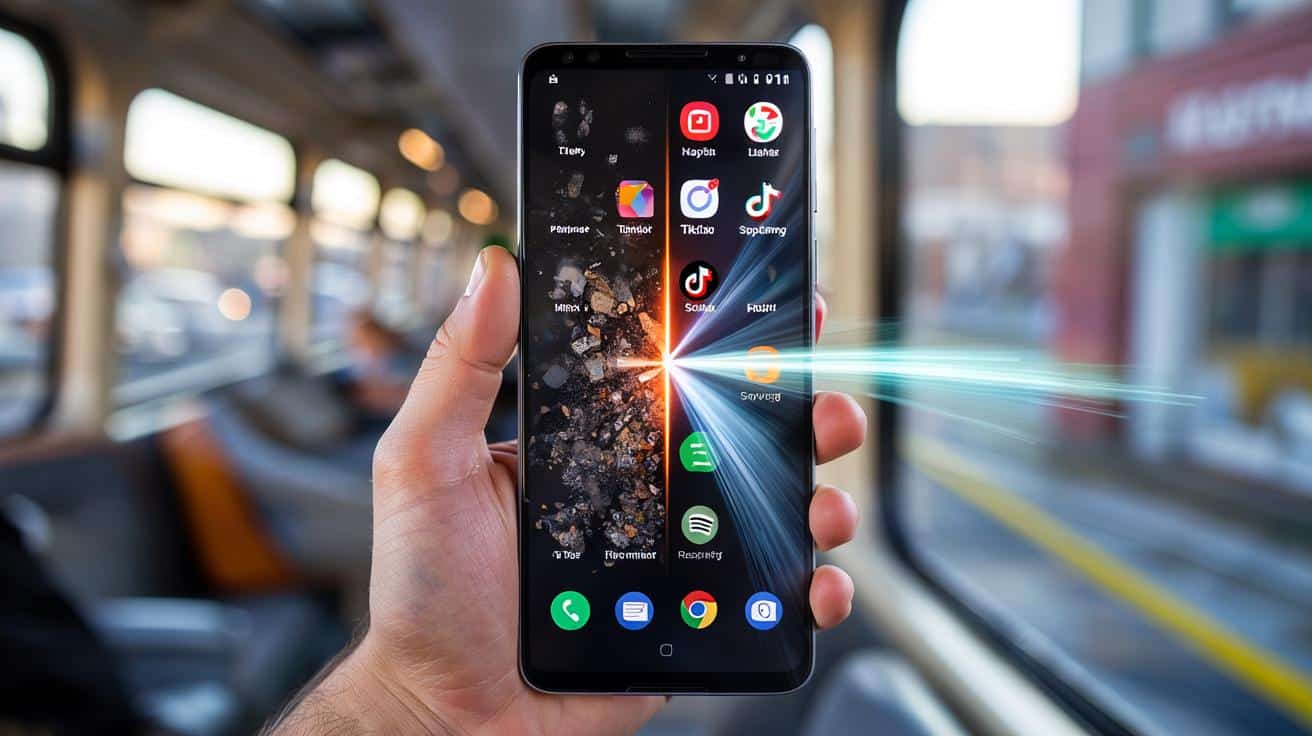
Now it hesitates at every tap, like it needs a coffee before opening Instagram. The culprit is often boring and invisible: junk cache piling up where you never look. It’s not dramatic, it’s just clutter. Clutter that steals milliseconds until they feel like seconds. The good news is you can clear it without risking your photos, messages, or sanity. And yes, you’ll feel the lift as soon as you do.
Morning train. Weak signal. You open Maps to check a shortcut and the app freezes just long enough to make your stomach tighten. The next stop slides by while your screen holds a ghost of the last thing you did. You jab the Home button, swipe away three apps, try again. A teenager two seats down flicks through TikTok without a hiccup. You wonder if your phone is old or just tired. The fix is hiding in plain sight.
Why Android slows when the cache bloats
Think of cache as your phone’s little cheat sheet. Apps stash images, thumbnails, scripts and bits of data so they don’t have to fetch them again. That’s how Instagram scrolls smoothly the first few swipes. When that stash gets too big or a few files go wonky, the shortcut turns into a speed bump. The system then spends time sifting through stale notes instead of grabbing fresh ones.
I watched a friend’s Pixel go from sticky to snappy in minutes. Chrome alone had cached nearly 1 GB of old site assets. Instagram had half a gig of reels previews. We cleared both and the lag vanished. Storage was 92% full before, 78% after. Android breathes better with elbow room, and the difference is immediate in the way apps open and switch.
There’s cache, and then there’s data. Cache is temporary scaffolding. Data is your logins, chats, saved maps, downloads. Clearing cache wipes the scaffolding and forces apps to rebuild fresh pieces as you use them. Clearing data resets the app as if it were newly installed. That’s why lag often shrinks when you clear cache, while clearing data feels like a house move. If you mix them up, you’ll lose sessions and settings you meant to keep.
The fast fix: clear caches that actually matter
Open Settings > Apps (or Apps & notifications) > See all apps. Tap the slow offender (Chrome, Instagram, TikTok, Maps, Spotify are usual suspects). Tap Storage & cache. Hit Clear cache. On Samsung, you can also try Settings > Battery and device care > Storage > Clean now. In Chrome itself, tap ⋮ > History > Clear browsing data > Cached images and files. In Files by Google, head to Clean, review “Junk files”, and confirm. This takes two minutes and feels oddly satisfying.
We’ve all been there: clinging to months of cached stuff because it feels safer than touching anything. Here’s the truth — cache is meant to be disposable. Don’t nuke every app every day. Focus on the heavy ones and the ones misbehaving. Keep 10–20% storage free so Android can juggle smoothly. Disable auto-downloads in WhatsApp/Telegram if your storage creeps. And resist “phone booster” apps that churn for show and chew battery.
Pro tip: in many settings screens the button you want is Clear cache, not Clear storage. Let’s be honest: nobody really does that every day. If you still feel sticky after a clean, give the phone a full restart to flush temporary bits system-wide. Then update your worst offenders in the Play Store so you’re not wrestling with a buggy build. Consider trimming offline maps and podcasts if they’ve quietly ballooned.
“Cache is a feature, not junk. Clear it when it misbehaves, then let it rebuild.” — a repair tech who sees 20 laggy phones a week
- Target top offenders: Chrome, Instagram, TikTok, Maps, Spotify, Reddit
- Files by Google: Clean tab > Junk files and large media
- Samsung: Battery and device care > Storage > Clean now
- Keep 10–20% storage free for smooth system swaps
- Restart weekly to flush transient cruft
Going deeper: when lag lingers
If the slowdown survives a targeted cache purge, widen the net. Clear Google Play services cache: Settings > Apps > See all > Google Play services > Storage & cache > Clear cache. For Google app and System WebView, do the same. Open Telegram > Settings > Data and Storage > Storage Usage to empty its media cache without touching chats. On WhatsApp, Settings > Storage and data > Manage storage, then prune bloated threads and forwarded videos.
Free space changes everything. Offload camera bursts to cloud or a laptop. Trim downloads and screen recordings. In Files by Google, sort by Large files and top offenders pop right up. On Samsung and OnePlus, Device Care/Manager can flag unused apps to uninstall. If your phone supports it, an advanced “Wipe cache partition” from recovery can help: power off, hold Power + Volume Up, choose Wipe cache partition, reboot. It doesn’t erase personal data on most modern models.
Lag can also be about over-eager apps rather than cache alone. Turn off autoplay in social apps. Reduce Background data for apps that don’t need it: Settings > Network & internet > Data usage > App data usage. If animations feel sticky, reduce them: enable Developer options (tap Build number seven times), then set Window/Transition/Animator scale to 0.5x. Finally, remember the simple win that fixes more phones than any hack — a full reboot after a proper clean.
Where this leaves you
Most phones don’t get slower with age so much as they get crowded. Caches swell, media piles up, and background habits nibble away at the same slice of performance. Lighten the load and the hardware you already own usually shows you what it can still do. The result feels less like a tweak and more like getting your phone back.
There’s also a mindset shift here. Cache isn’t sacred, it’s scaffolding. You clear it, you carry on, the app quietly rebuilds what it needs. If you can make that a monthly ritual, the daily friction fades. Your thumbs stop waiting on spinners. Your maps open on the first try. And you might even leave the house without that faint dread of a frozen screen at the worst moment.
Leave yourself a little free space, keep an eye on the usual hogs, and treat a restart like fresh air. People often expect drama from maintenance, but the best wins happen in silence. If you’ve found a combination that makes your phone fly again, share it with a friend on the verge of an upgrade they don’t actually need. Your lag story might just save them a few hundred quid.
| Key Point | Detail | Interest for the reader |
|---|---|---|
| Clear app cache, not data | Settings > Apps > [App] > Storage & cache > Clear cache | Speed boost without losing logins or chats |
| Free 10–20% storage | Use Files by Google or Samsung Device Care to remove junk and big files | Immediate performance gains across the system |
| Target usual hogs | Chrome, Instagram, TikTok, Maps, Spotify, Telegram/WhatsApp media | Fix lag fast by tackling the biggest offenders first |
FAQ :
- Does clearing cache delete my photos or messages?No. Cache is temporary app files. Your photos, texts and chats live in app data or your gallery, which aren’t touched by a cache clear.
- How often should I clear cache?When an app misbehaves or storage crosses ~85–90%. Monthly is a good rhythm if you’re a heavy social/video user.
- What’s the difference between Clear cache and Clear data?Clear cache removes temporary files. Clear data resets the app, logging you out and wiping settings and offline items.
- Is wiping the cache partition safe?On devices that offer it, yes — it doesn’t erase personal data. It clears system temporary files and can help after big updates.
- Should I use “cleaner” or “booster” apps?Not recommended. They often run constantly, drain battery, and duplicate built-in tools. Use Settings and Files by Google instead.






Just did this on my Pixel 5: Chrome cache was 1.1 GB, Instagram ~500 MB. Cleared both via Settings > Apps > Storage & cache, then restarted. Storage dropped from 91% to 76%, and the lag on app switching is gone. Definately postponing an upgrade—thanks for the clear steps and the “don’t clear data” reminder!